
The Power of Moms
In Your Movement
ComNet25 | Denver
“Our speaking will permit other women to speak until laws are changed, until lives are saved, and the world is altered forever.”
〰️
“Our speaking will permit other women to speak until laws are changed, until lives are saved, and the world is altered forever.” 〰️
Summary
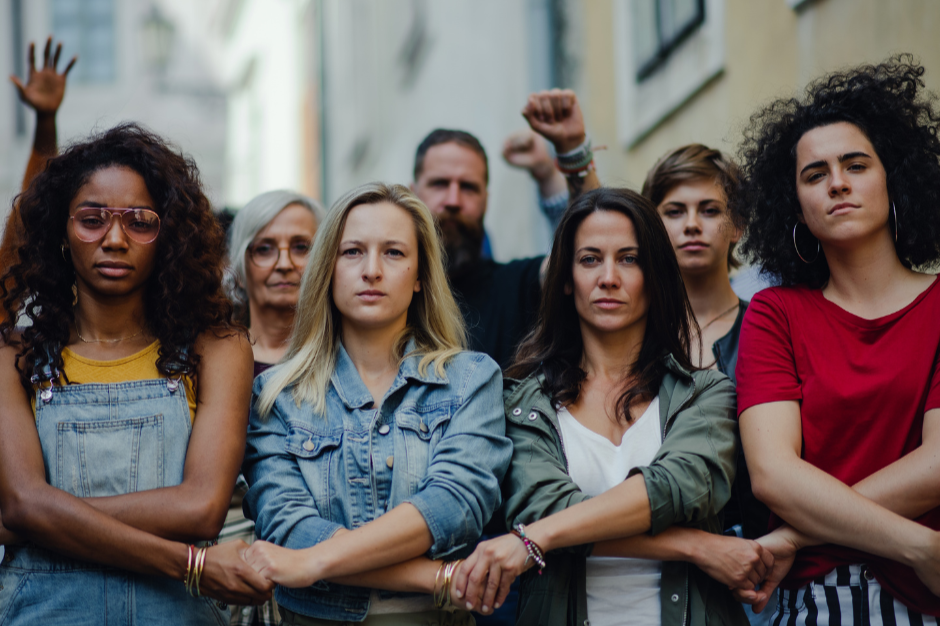
Over the past few years, we have seen a rise in social, political, and cultural polarization. We are currently in a moment where difference is seen as a threat, and the popular “us vs them” mentality is dividing people who have more common values and needs than they can acknowledge. In this increasingly polarized society, shared values and trusted messengers are needed to help guide our audiences from discomfort and distrust into a shared vision for our collective wellbeing. The Power of Moms is a position paper that outlines how activating moms as campaign organizers and spokespeople in advocacy, narrative, and political campaigns can help us overcome polarizing divides and take action for our collective wellbeing.
Polarization appears to be at an all-time high in our nation, creating gaping social, cultural, and political divides in our communities. These divides are being exacerbated by 1) media bias, 2) the normalization of a post-truth America, and 3) increased mistrust in our institutions and spokespeople.
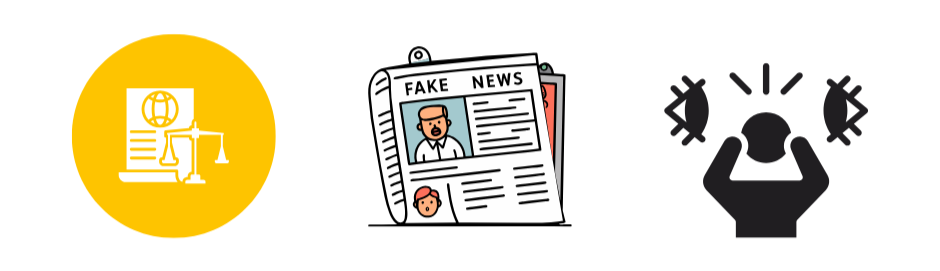
The Problem
-
Biased media outlets, corporate leadership, and algorithms prioritize money and corporate interests over fact-based news. This prioritization impairs community well-being and the preservation of democracy, contributing to the polarization we are seeing.
Local and community media outlets are disappearing or being purchased by large corporate institutions that have little investment in our communities.
Legacy media is more interested in shaping narrative and culture than delivering unbiased news that educates, informs, and empowers people.
Corporate leadership decides what news is aired and frames it in alignment with their financial and political interests.
Digital algorithms deprioritize social and political content and/or create media bubbles that trap people in a confirmation loop.
-
The decrease in fact-based journalism, the constant 24-hour news cycle, and “everyone has an open mic” social and digital media have made it much more difficult for society to have a shared, objective truth. Studies also show that while sharing facts and scientific data can affirm beliefs a person already has, it does not change people’s minds and lead them to accept objective truths anymore. Additionally, traditional, digital, and social media companies have abdicated their responsibility to identify misinformation and disinformation – refusing to work at restoring a collective sense of objective truth because mis- and dis-information benefits them financially and politically.
-
People are losing confidence in historically respected institutions including local, state and federal government, the news media, doctors, scientists, colleges, and universities.
The United States is seeing a decline in the number of people who trust scientists and who believe that science has a positive impact on society.
A record-low share of Americans have a positive view of the Supreme Court.
Two in three adults in the United States believe that low trust in government makes it harder to solve the nation’s problems. A majority of adults believe the federal government unfairly benefits some groups over others, fails to respond to the needs of ordinary Americans, and does not handle taxpayer money responsibly.
Many Americans believe they only see part of the news they should be seeing and believe the news media deliberately avoids reporting certain stories.
The distrust in these institutions has led to a distrust in spokespeople, people who talk to us about the issues that shape our lives. Without trusted spokespeople, we are unable to form shared values or objective truths.
Our Solution
Values
| Current Core Values |
Needed Core Values |
|---|---|
| Independence: Focuses on self‑reliance and self‑sufficiency. Ignores the fact that our journeys and wellbeing are connected. Pushes people to “pull themselves up by their bootstraps” and avoids creating systems and infrastructures that support our ability to succeed and create safety nets for people and families. | Interdependence: Our communities are mutually dependent on one another. Rev. Dr. Martin Luther King Jr., described our interdependence or interconnectedness perfectly in the “Letter from the Birmingham Jail” when he wrote: “Injustice anywhere is a threat to justice everywhere. We are caught in an inescapable network of mutuality, tied in a single garment of destiny. Whatever affects one directly, affects all indirectly.” We are all on this journey together, and in the spirit of Fannie Lou Hamer, we will not be free until our neighbors are free. |
| Power Over Others: When a person uses their position, resources, and influence to control others. Accumulates resources and assumes power in order to assert their desire onto others. | Power With Others: Instead of accumulating power to control others, we accumulate power with our neighbors to build communities that work for us all. We recognize that we live in a society and world of abundance; there is enough for us all. We refuse to fight over scraps and instead aim to exercise our power together for the common good. |
| Coercion: Uses messaging and tactics that disregards people’s right and ability to self‑determine their futures and positions. Focuses on manipulating people to agree with your position and take your desired action. | Integrity: Showing up with a consistency of character. In addition to being honest and transparent, integrity ensures that we are accountable to one another. |
| Self‑Preservation: Uses the fear of scarcity to coerce people into sacrificing their neighbor’s wellbeing. Prevents people from envisioning a world where there is enough for us also. Manipulates people into fighting our neighbors over scrapes instead of the corporations and billionaires who are hoarding resources despite the harm it causes families and working people. | Collective Wellbeing: A state where no group oppresses or has power over another; instead, individuals across race, ethnicity, identity, location, and socioeconomic status are safe and self‑determining. |
In order to overcome these challenges, we must activate trusted spokespeople who can help shift our collective values.
Moms
In a society where trust in institutions and spokespeople is plummeting, activating moms as trusted spokespeople can assist you in breaking through the clutter of content and the noise of mis- and disinformation.
-
Everyone has a mom, knows a mom, and/or trusts a mom. When moms speak, we listen. When moms make demands of decision makers, they take notice. The moral authority of moms in our society gives them influence over their family, their community, and those with the power to shape the world we live in.
-
Because of the respect and reverence moms are given in our society, they are natural messengers for values-based messaging. We expect mothers to expand our understanding and ground us ethically.
-
Moms bring with them diverse lived experiences. Each is able to bring a unique, yet relatable, experience to your campaign. These stories ground your campaign and activate powerful connections to your issue.
-
Moms are committed to building a world where their children have the resources and support they need to thrive. This makes them committed contributors (within reason of their capacity) to causes and campaigns.
-
From the home to the workplace, moms spend every day organizing lives, work, and activities. These are transferable skills that can empower them as community organizers.
Messaging Learnings
Once you have moms on board, there are key messaging practices that they should follow to ensure their stories are resonating with audiences and fitting into your overall narrative strategy.
-
Values-based messaging helps you establish a human connection that can reach across differences and cut through stereotypes and partisan suspicion. It activates emotions and opens an audience’s hearts and ears to the message.
-
Facts are your supporting evidence, not the main character. Use personal experience to connect with your audience and support that experience with facts and data.
-
Differences shouldn’t be scary. Help make cultural differences familiar by exploring it, explaining it, and connecting it to the familiar.
-
We have more in common than we know. Respecting differences while leaning into our shared values and needs are key to building a winning coalition.
Take Action

Join our spring training cohort, where we will be training moms to take action and connecting them to organizations doing advocacy in their communities.
Integrate the skill and power building of moms into your programming. Looking to bring more moms into your programming, connect with us to receive moms from our training cohorts.
Invest into the skill and power building of moms. Be intentional about investing into and sustaining movements that are developing the most powerful changemakers of today.

Get Involved
Change your community today.